Measure Your Allostatic Load: The 10-Marker Index You Can Track at Home
By Tristan Siokos · Founder, Recalibrate · June 12, 2026
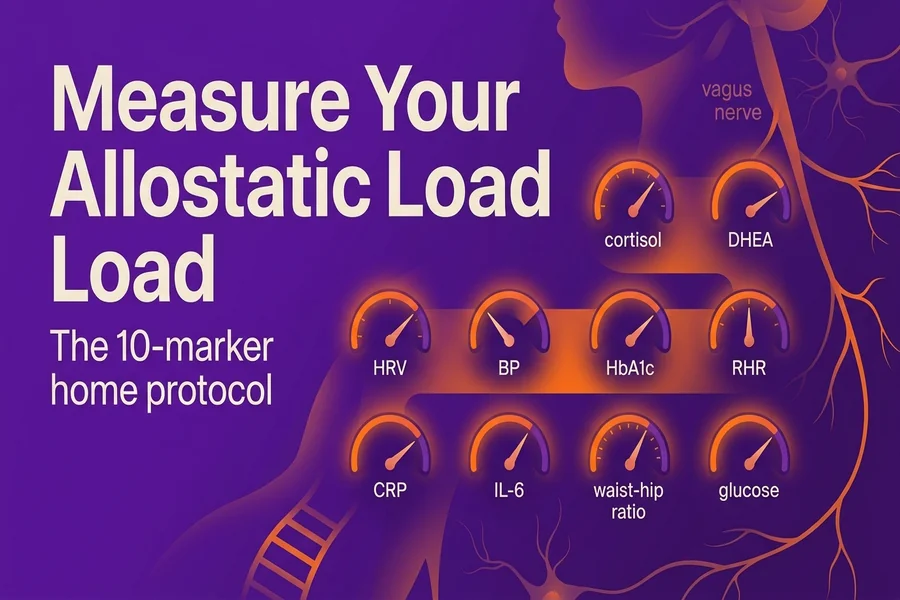
Allostatic load is measurable. The McEwen index uses 10 biological markers across the HPA axis, autonomic nervous system, cardiovascular, immune and metabolic systems. Here is how to track them yourself - with home wearables, lab work and daily self-report - and how the Recalibrate Stability Score combines them into one number.
Why measurement is the leverage point
Allostatic load is the cumulative biological cost of sustained stress and incomplete recovery. It is what predicts breakdown into chronic disease more reliably than current stress levels do.
You cannot intervene on what you cannot see. And by the time the load has caused diagnosable disease, you have already paid the cost. The leverage point is measuring the load before the breakdown - then intervening on the inputs that are pulling it up.
The McEwen index uses 10 biomarkers across five systems. Most are practical to track at home or in routine bloodwork.
The 10 markers and how to track each one
HPA axis:
1. Cortisol, saliva cortisol curves (4-point or DUTCH test). Look for a steep morning peak and a low evening trough. Flat curves = high allostatic load. Available through functional medicine labs.
2. DHEA-sulfate, single blood test. Often falls with chronic load. Normal range varies by age and sex.
Sympathetic nervous system:
3. Resting heart rate (RHR), any wearable. Trends matter more than individual values. RHR creeping up over months = load.
4. HRV, wearables (Oura, Whoop, Garmin, Apple Watch with third-party app). Falling HRV trend = load.
Cardiovascular:
5. Systolic blood pressure, home cuff. Elevated trend = load.
6. Diastolic blood pressure, same.
Metabolic:
7. HbA1c (3-month average glucose), routine bloodwork. Rising = insulin resistance from chronic cortisol exposure.
8. Waist-hip ratio (visceral adiposity proxy), tape measure at home. Rising waist:hip ratio without weight change = visceral fat accumulation, a load marker.
Inflammatory:
9. hs-CRP (high-sensitivity C-reactive protein), routine bloodwork. Chronically elevated = systemic inflammation.
10. IL-6, less commonly tested but a clear load marker. Available through specialised labs.
Index score: count how many of the 10 markers are in the worst quartile for your age/sex. 0-2 = low load. 3-4 = moderate. 5+ = high load. The composite is what predicts disease.
Daily, lighter-touch measurement
Lab work is quarterly at best. Daily measurement is where the regulation work actually happens. The variables to log daily:
- Sleep hours and subjective quality
- Resting heart rate (morning)
- HRV (overnight)
- Mood
- Cognitive function
- Pain level
- Energy
- Activity load
- Major stressors
The Recalibrate Stability Score combines six of these (autonomic, pain, mood, cognition, sleep, activity) into a single daily number. Watching the Stability Score across weeks gives you a visible read of allostatic load trends - and surfaces which inputs (poor sleep, conflict, post-viral days, hormonal phase) are pulling it up for you.
What to do when the load is high
Lowering allostatic load is a 3-6 month project, not a one-month sprint.
The non-negotiables:
- Sleep architecture protection - the system requires deep sleep to downregulate cortisol overnight. This is the single largest lever.
- Daily vagal toning - HRV breathing, cold exposure, humming, or whatever sticks. 15 minutes a day, every day.
- Movement within tolerance - regular, gentle. Cortisol clears with movement, but too much produces a rebound.
- Glucose stability - protein and fat with carbs. No liquid sugar.
- Co-regulation - safe humans, safe animals, safe environments. Underrated and biological.
The lab markers move slowly. The daily Stability Score moves within weeks. Use the daily score for feedback; use the quarterly bloodwork for proof.
Track your allostatic load in Recalibrate →
Related reading:
→ Allostatic load explained
→ Stuck in fight or flight
→ Nervous system dysregulation pillar guide
Recalibrate is an education and self-tracking tool, not a diagnostic service or a replacement for medical care.
Related articles
- Allostatic Load: The Hidden Cost of Surviving Too Long Without Recovery
Allostatic load is the cumulative wear-and-tear on your body from sustained stress, dysregulation and incomplete recovery. It explains why people break down years after the stressor stopped, and why chronic illness clusters. Here is the science from McEwen onward and how to measure your own load.
- Why You Get Sick the Moment You Stop: The Neuroscience of Leisure Sickness
It is called leisure sickness, and the underlying mechanism is parasympathetic rebound. First identified in 2001, it explains why people crash with illness, migraines, and exhaustion the moment a deadline ends or a holiday begins. This is not weakness. This is your nervous system finally believing it is safe enough to send the bill.
- Vagus Nerve Exercises for Chronic Pain: 6 Techniques That Actually Work
Vagus nerve stimulation is one of the fastest-growing trends in chronic pain management. But you do not need a device. These 6 evidence-based exercises activate your parasympathetic nervous system and turn down the pain volume from home.