How Self-Talk Physically Changes Your Brain: The Neuroscience of Your Internal Dialogue
By Tristan Siokos · Founder, Recalibrate · April 16, 2026
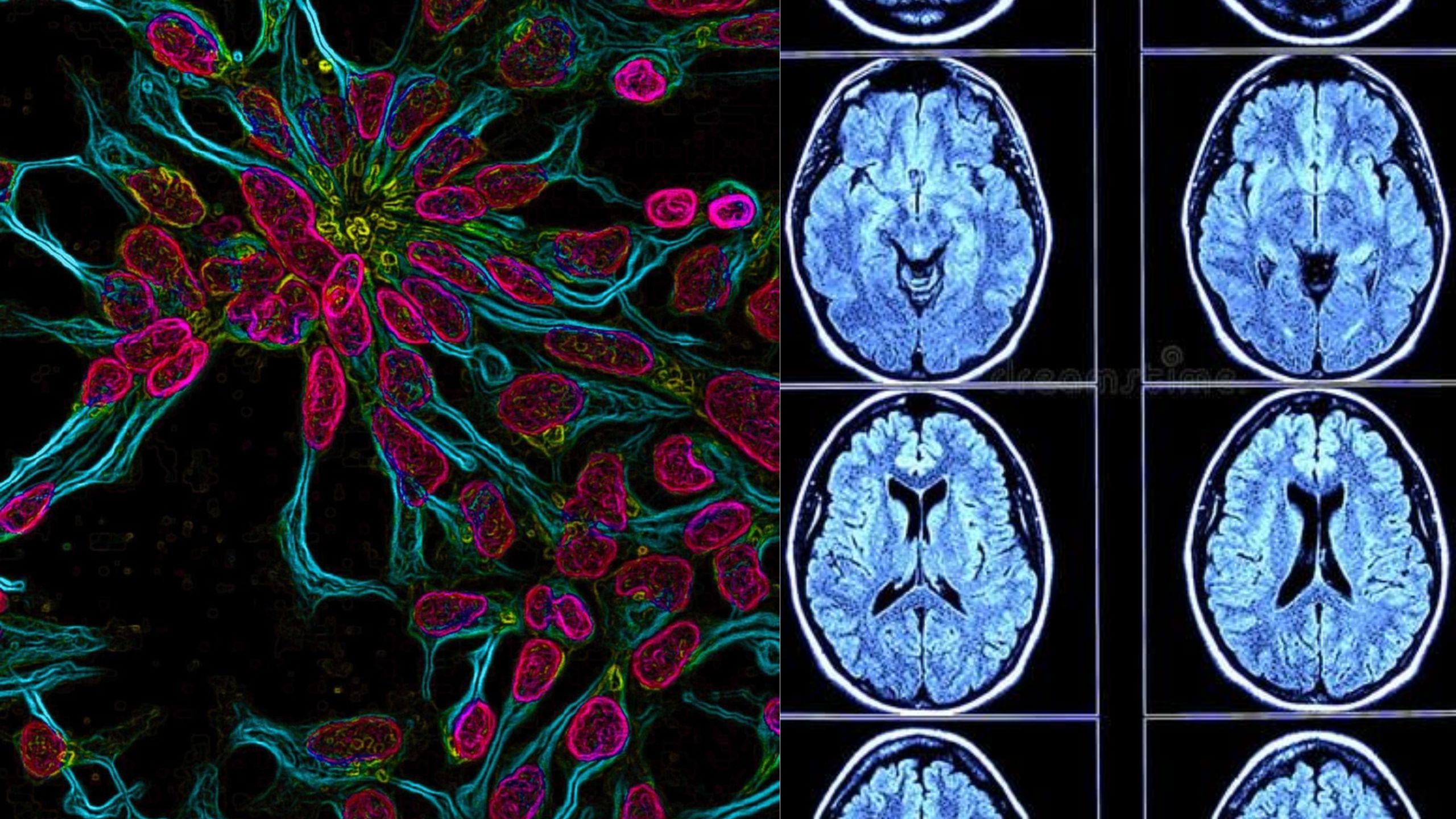
Neuroscience confirms your thoughts change your neurons. Every thought triggers a neurochemical cascade. Repeat it enough and you do not just feel different. You become different. At a cellular level. Here is what is actually happening inside your brain when you talk to yourself.
Your Thoughts Are Not Abstract. They Are Biological Instructions.
Your internal dialogue physically alters the structure and function of your neurons in real time. Every thought you think triggers a neurochemical cascade. Repeat that thought enough times and you do not just feel different. You become different. At a cellular level.
Your brain is listening to everything you say to yourself. And it is rebuilding accordingly.
This is not motivational content. This is measurable neuroscience. Fluorescence microscopy of living neurons and structural MRI of the human brain confirm the same finding: your brain does not know the difference between a real threat and a story you keep telling yourself. It responds to both with the same architecture.
Choose your words carefully. Your brain is taking notes.
Negative Self-Talk: The Amygdala-Cortisol Cascade
Negative self-talk activates the Amygdala and triggers a cortisol release from the HPA axis (hypothalamic-pituitary-adrenal axis). Cortisol is your primary stress hormone. In acute situations, it is protective and useful.
In sustained doses, it is destructive.
The neural cascade:
1. Negative internal dialogue registers as a threat signal
2. The Amygdala fires, activating the HPA axis
3. Cortisol floods the system
4. Sustained cortisol causes dendritic atrophy in the Hippocampus and Prefrontal Cortex
Translation: Repeated negative thoughts physically shrink the brain regions responsible for memory, learning, and rational decision-making. The Hippocampus loses dendritic branches. The Prefrontal Cortex thins.
Meanwhile, the Amygdala actually grows larger and more reactive with chronic stress exposure. Your brain is literally building more threat-detection hardware while dismantling the hardware you need to think clearly about those threats.
This is not damage from external trauma. This is your own internal monologue reshaping your brain. Every day. On repeat.
Constructive Self-Talk: Building New Neural Architecture
Positive or constructive self-talk activates the Prefrontal Cortex and stimulates the release of dopamine and serotonin. These neurotransmitters strengthen synaptic connections and promote neurogenesis in the Hippocampus.
The neural cascade:
1. Deliberate, constructive internal dialogue activates the Prefrontal Cortex
2. Dopamine release reinforces the neural pathway that produced the thought
3. Serotonin modulates mood and supports long-term synaptic stability
4. The Hippocampus generates new neurons (neurogenesis) in response
Translation: Deliberate, constructive internal dialogue builds new neural pathways and reinforces existing ones.
This is not positive thinking or toxic positivity. Constructive self-talk is accurate, deliberate, and reframing:
- Instead of "I am broken" > "My nervous system is sensitised and that is a reversible process"
- Instead of "Nothing will help" > "I have not found the right approach yet"
- Instead of "I cannot cope" > "This is hard and I am still here"
The language matters because the brain encodes the specific words and their associated threat or safety value. Neutral, accurate language produces a different neurochemical cascade than catastrophic language.
The Default Mode Network: Your Brain on Autopilot
The Default Mode Network (DMN) runs your internal monologue on autopilot roughly 70% of your waking hours. Most of that dialogue is repetitive. And most of it is negative.
You are not choosing these thoughts. They are pattern loops inherited from past experience running unchecked.
The DMN activates when you are:
- Not focused on a specific task
- Daydreaming or mind-wandering
- Ruminating about the past
- Worrying about the future
- Lying in bed trying to fall asleep
What the research shows:
- The average person has approximately 6,000 thoughts per day
- An estimated 80% of those thoughts are negative
- An estimated 95% are repetitive (the same thoughts as yesterday)
- The DMN is more active and less regulated in people with chronic pain, depression, and anxiety
This means your brain is running a mostly negative, mostly repetitive programme for most of your waking life. And because of the Amygdala-cortisol cascade, that programme is physically reshaping your brain to be more reactive to threats and less capable of rational override.
Self-Directed Neuroplasticity: Overriding the Loops
Self-directed neuroplasticity is the process of consciously overriding those autopilot loops. When you deliberately change the language of your internal dialogue, you force the Prefrontal Cortex to override the Amygdala.
Do it consistently and the new pathway becomes the default. The old one weakens through synaptic pruning.
How it works in practice:
1. Awareness (Metacognition)
Notice the thought without engaging with it. "I am having the thought that I cannot cope." This engages the Prefrontal Cortex as an observer rather than a participant.
2. Label the Pattern
Name it. "That is the catastrophising loop again." Labelling activates the ventrolateral Prefrontal Cortex, which dampens Amygdala reactivity. Research by Matthew Lieberman at UCLA showed that affect labelling reduces amygdala activation measurably.
3. Reframe Deliberately
Replace the language with something accurate and constructive. Not positive. Accurate. "This is a hard moment. It will pass. I have been through hard moments before."
4. Repeat
Repetition is the mechanism of neuroplasticity. A single reframe does almost nothing. Consistent reframing over weeks and months builds the new default pathway. The old one weakens.
This is not different from physical training. The compound effect is real, measurable, and permanent if maintained.
Epigenetics: Your Thoughts Change Your Gene Expression
Internal dialogue also modulates gene expression through epigenetic mechanisms. This is where it goes from neuroscience to molecular biology.
Chronic stress from negative self-talk upregulates inflammatory gene profiles. Specifically, it increases expression of NF-kB (nuclear factor kappa B), a master regulator of inflammation. Chronically elevated NF-kB is associated with autoimmune conditions, cardiovascular disease, chronic pain sensitisation, and accelerated cellular ageing.
Mindfulness and cognitive reframing have been shown to downregulate those same inflammatory profiles. A 2013 study by Dusek et al. demonstrated that relaxation response practices produced measurable changes in gene expression within a single session.
What this means:
Your thoughts are not abstract. They are biological instructions that reach all the way down to your gene expression. The stories you tell yourself about your pain, your health, your capacity, your future are not just psychological events. They are molecular events that alter which genes are active in your cells right now.
For chronic pain and chronic illness: the internal narrative of "I am broken, nothing will help, this will never improve" is not just demoralising. It is actively upregulating the inflammatory pathways that sensitise your nervous system and amplify your symptoms.
The reverse is also true. Constructive, accurate internal dialogue, combined with practices like mindfulness, journaling, and cognitive reframing, produces measurable anti-inflammatory effects at the genetic level.
Your brain is taking notes. Your genes are reading them.
Recalibrate is an education and self-tracking tool, not a diagnostic service or a replacement for medical care.
Related articles
- Daily Neural Workouts: 8 Science-Backed Techniques to Rewire Your Brain
Your brain is a prediction machine, not an archive. If you do not deliberately train new patterns, it reverts to its oldest, most dominant pathways. Here are 8 daily neural workouts - education, gratitude, curiosity, authenticity, meditation, resilience, connection and self-compassion - that fuel real, mechanism-level neuroplasticity.
- The Neuroscience of Control: What You Can Actually Train (and What Was Never Yours)
Most people think control is about willpower. The neuroscience says otherwise. Your nervous system processes millions of inputs every second - most of them are not yours to control. But seven specific circuits absolutely are: response control, self-talk, boundaries, beliefs, vagal tone, attention and emotional regulation. Stop training what was never yours. Start training what is.
- The Neuroscience of Happiness: The 12 Pillars of a Fulfilled Life
Most happiness frameworks are built on intuition. These twelve are built on neurobiology. From how your default mode network needs silence to how your gut produces 90% of your serotonin, here is the map your brain actually runs on.